Psyllium husk jelly – good for diarrhoea and constipation
- Supplements

Psyllium husk jelly has become a popular way to take psyllium husk fiber which, on its own, is pretty disgusting.
In this article, we’ll look at why psyllium works for IBS, how it can support gut health, and how to make psyllium husk jelly at home.
We will also share practical tips for incorporating it into your meals and making it more enjoyable than just mixing it into water and drinking it straight away.
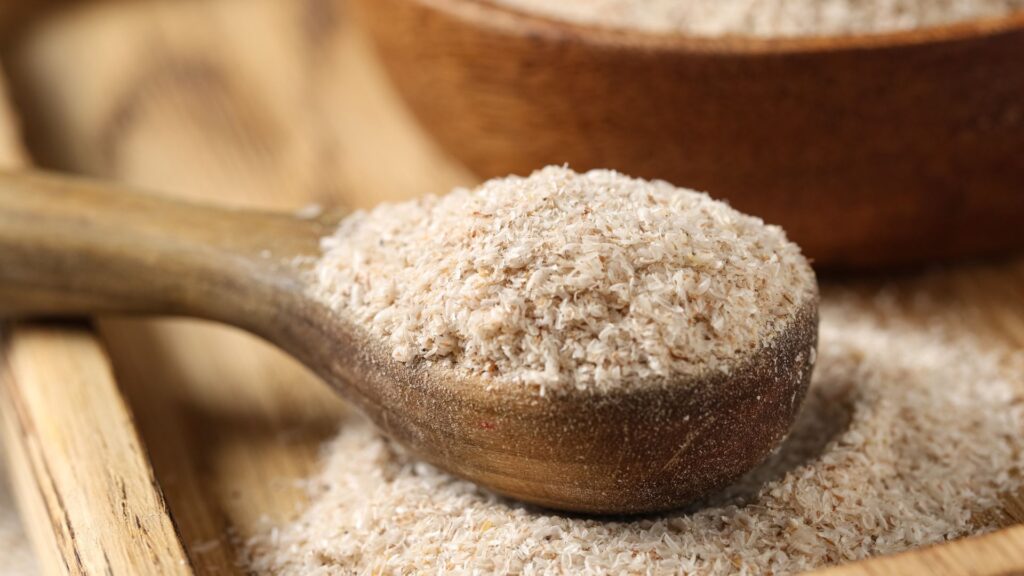
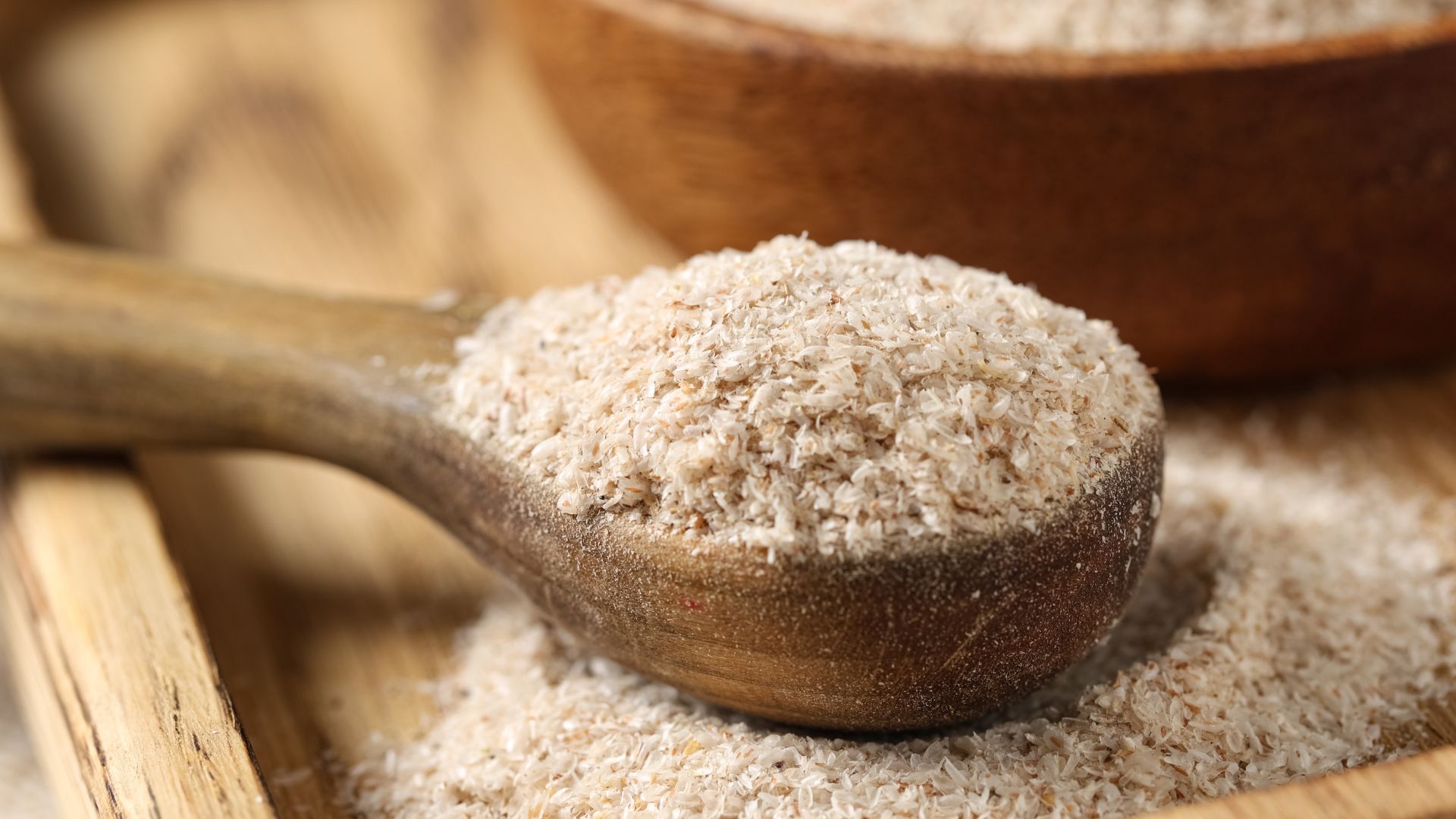
What is psyllium husk?
Psyllium husk is a natural fibre derived from the seeds of Plantago ovata. Another name for psyllium is ispaghula husk (1).
Psyllium husk turns into a jelly-like substance because it is rich in soluble fibre, which can absorb and retain water (1).
Unlike some other fiber supplements, psyllium husk passes through the digestive tract relatively intact and is fermented more slowly and to a lesser extent (1). This means it does not cause bloating unlike other fiber sources.
This is one of the reasons I often recommend psyllium husk to my patients with IBS or other digestive problems who struggle to get enough fibre throughout the day, as it provides a gentle way to top up their daily fibre intake.
You may also know psyllium husk by some of the branded products on the market, which are pretty popular:
- Metamucil
- Fybogel
- Fiberall
- Hydrocil
Each of these brands has different flavours added to the husk to make it more palatable. They also vary in how fine the powdered husk is.
How does psyllium husk help with digestion?
This might surprise you, but psyllium can help relieve both constipation and diarrhoea (1).
When psyllium is mixed with water, it creates a gel that helps regulate the amount of water in your stool.
For constipation, this psyllium gel mix holds water in the stool, making it softer, bulkier, and easier to pass.
For diarrhoea, it absorbs excess water in the bowel, helping to firm up loose stools and improve their consistency.
Rather than simply acting as a laxative, psyllium helps normalise stool consistency in either direction, making it one of the few fibre supplements that can be beneficial for both constipation and diarrhoea.
Is psyllium husk good for IBS?
Psyllium husk is one of the most well-researched fibre supplements for people with IBS.
Getting enough fibre can be challenging for many people with IBS, especially when certain high-fibre foods trigger symptoms. Psyllium offers a gentle way to increase fibre intake while helping regulate bowel habits.
Because it forms a gel and is slowly fermented by gut bacteria, psyllium is generally well tolerated and can help with both constipation and diarrhoea by improving stool consistency (2).
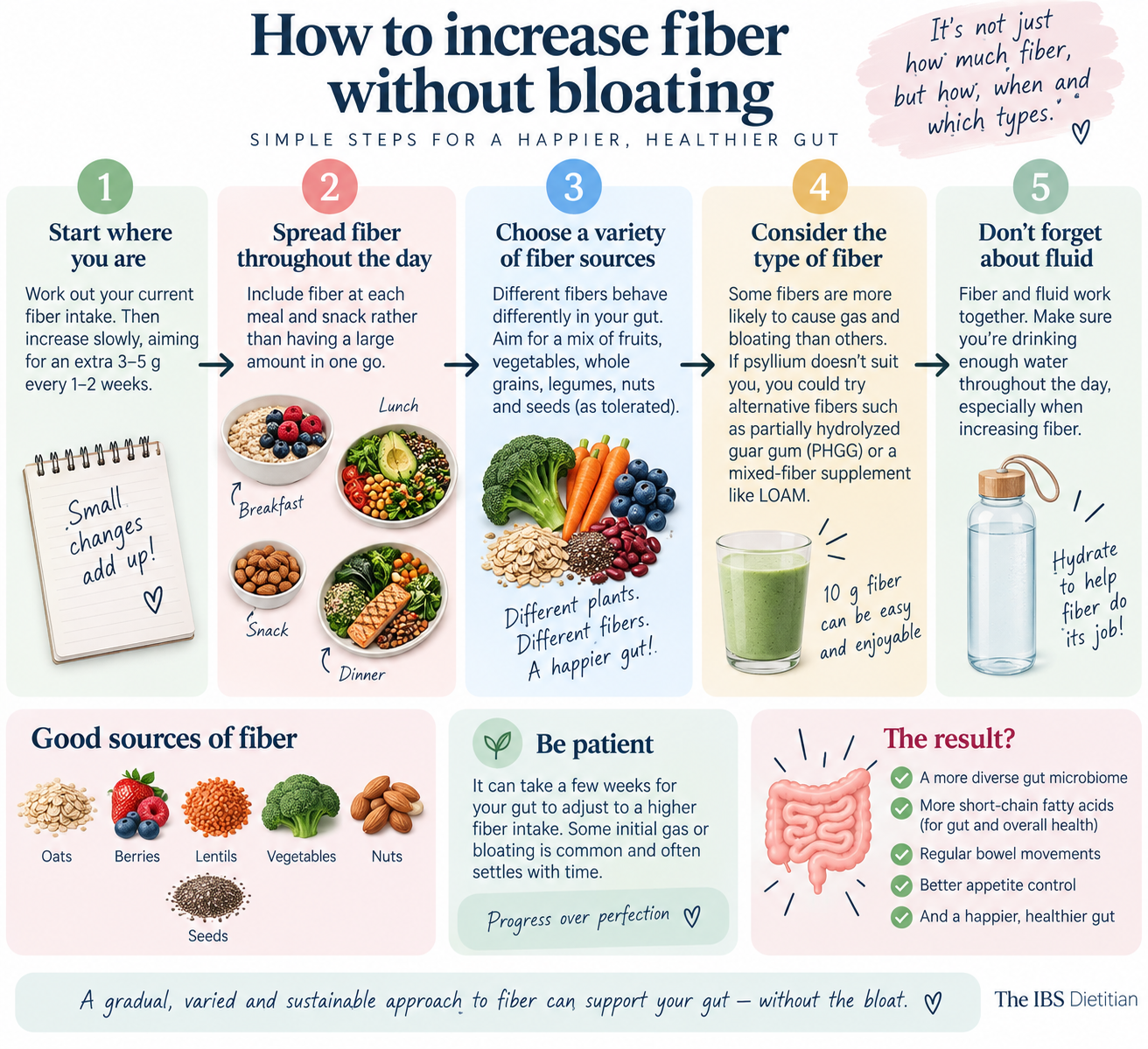
It may be beneficial for IBS-C, IBS-D, and IBS-M. Start with a small dose (3 – 4 g/day) and increase gradually up to 10 g daily to reduce the risk of bloating (2).
To learn more about psyllium husk and IBS-D, read our article: What is Metamucil (psyllium husk) and can it help with IBS- diarrhea?
Should you try psyllium husk jelly?
Although psyllium husk is usually mixed with water or added to foods, turning it into a flavoured jelly can make it easier and more enjoyable to consume (rather than a test on your gag reflex).
The traditional preparation of psyllium husk is a little like drinking wall paper paste.
For people who struggle with the texture or taste of psyllium, a jelly preparation you eat on a spoon can be a more appealing option and worth trying.
It can be flavoured with fruit, yoghurt, or other ingredients, making fibre supplementation feel more like a snack rather than a supplement.
How to make psyllium husk jelly?
Making psyllium husk jelly is quick and easy. The basic recipe provides approximately 8 g of fibre per serving:
- 1 tablespoon (10 g) of psyllium husk
- 300 ml of liquid
Choose a liquid of your choice, for example:
- Fruit juice (cranberry, orange, blueberry, etc.)
- Milk or plant-based alternatives
Mix psyllium husk into the liquid, stir well, leave it to thicken for at least 5 minutes until it forms a jelly-like consistency (store it in the fridge up to 3 days).
But do note that the longer you leave it, the thicker it will get.
As the full portion can be quite a large amount of fiber, you can divide the jelly into two portions and have them at different times of the day.
How to take psyllium husk jelly
You can enjoy psyllium husk jelly on its own or, as I often suggest to my clients, pair it with a variety of foods, including:
- Yoghurt
- Overnight oats
- Chia pudding
- Fresh or stewed fruit
- Smoothie
When you have IBS, it can feel mentally better to eat ‘normal’ food rather than having to have a supplement time as such.
When incorporating psyllium into your diet, make sure to drink plenty of water throughout the day, as adequate fluid intake is important for psyllium to work effectively and safely.
Summary
Psyllium husk jelly can make it easier to meet your daily fibre needs and may also help regulate bowel movements, whether you experience constipation or diarrhoea, by helping to balance the amount of water in your stool.
To make psyllium husk jelly, all you need is psyllium husk and liquid of your choice; my patients’ favourite combination is with cranberry juice.
Psyllium husk jelly is versatile. You can add it to the bowl of cereals, yoghurt, porridge, or smoothie.
Written by Barbara Lešnik, RD, MSc, reviewed by Kirsten Jackson, Consultant Dietitian, BSc Hons, RD, PG Cert
Book a free enquiry call
You might also like...
Can Gas X (Simethicone) Help with IBS? A Dietitian Explains