How to get enough fiber with IBS: 10 dietitian approved ways.
- Supplements

If you have IBS, there is a good chance you’ve become a little scared of fiber. Perhaps you had a particularly bad experience after eating beans, switched to white bread because it felt safer, or started avoiding wholegrains altogether because you were worried about bloating.
I see this all the time in my IBS clinic. People gradually remove more and more foods from their diets, and before they know it, they’re surviving on a relatively small selection of foods that they know won’t cause too much trouble.
But here’s the problem. Fiber is incredibly important for our long-term gut health, and unnecessarily restricting it means missing out on benefits that extend well beyond bowel movements. Fiber contributes to normal bowel function, and certain types are fermented by our gut bacteria to produce beneficial compounds such as short-chain fatty acids.
The answer isn’t to avoid fiber because you have IBS. It’s to understand which types of fiber work for you, how much you can comfortably manage and how to build a diet that provides enough without leaving you feeling miserable.
The UK recommendation for adults is 30g of fiber per day, yet most people don’t get anywhere near this amount. If you have IBS, getting enough can feel even more complicated.
So in this article, I’m sharing the practical strategies I use with my clients to increase their fiber intake without turning eating into another full-time job.
1. Understand that not all fiber is the same
One of the most important things I teach people with IBS is that fiber isn’t one single substance. Different fibers have different properties, and this can make an enormous difference to how your gut responds.
Some fibers absorb water and form a gel, some add bulk to stools, and others are rapidly fermented by gut bacteria. For example, psyllium husk is a gel-forming fiber with good evidence supporting its use in IBS, whereas inulin is more readily fermented and can cause significant bloating in some people.
This is why two foods containing exactly the same amount of fiber can affect your digestive system differently.
I often see people who have been told to increase fiber for constipation, only to feel considerably worse when they start eating enormous bowls of bran cereal. They then conclude that fiber doesn’t agree with them.
But the problem may not be fiber itself. It may be the type they’ve chosen or how quickly they’ve increased it.
I’ve covered the science behind this in much more detail in my article Why Does Fiber Make My IBS Worse?, so I won’t repeat it all here.
For now, the important thing to understand is that having IBS doesn’t automatically mean you need less fiber. It means you may need to be more selective about your sources.
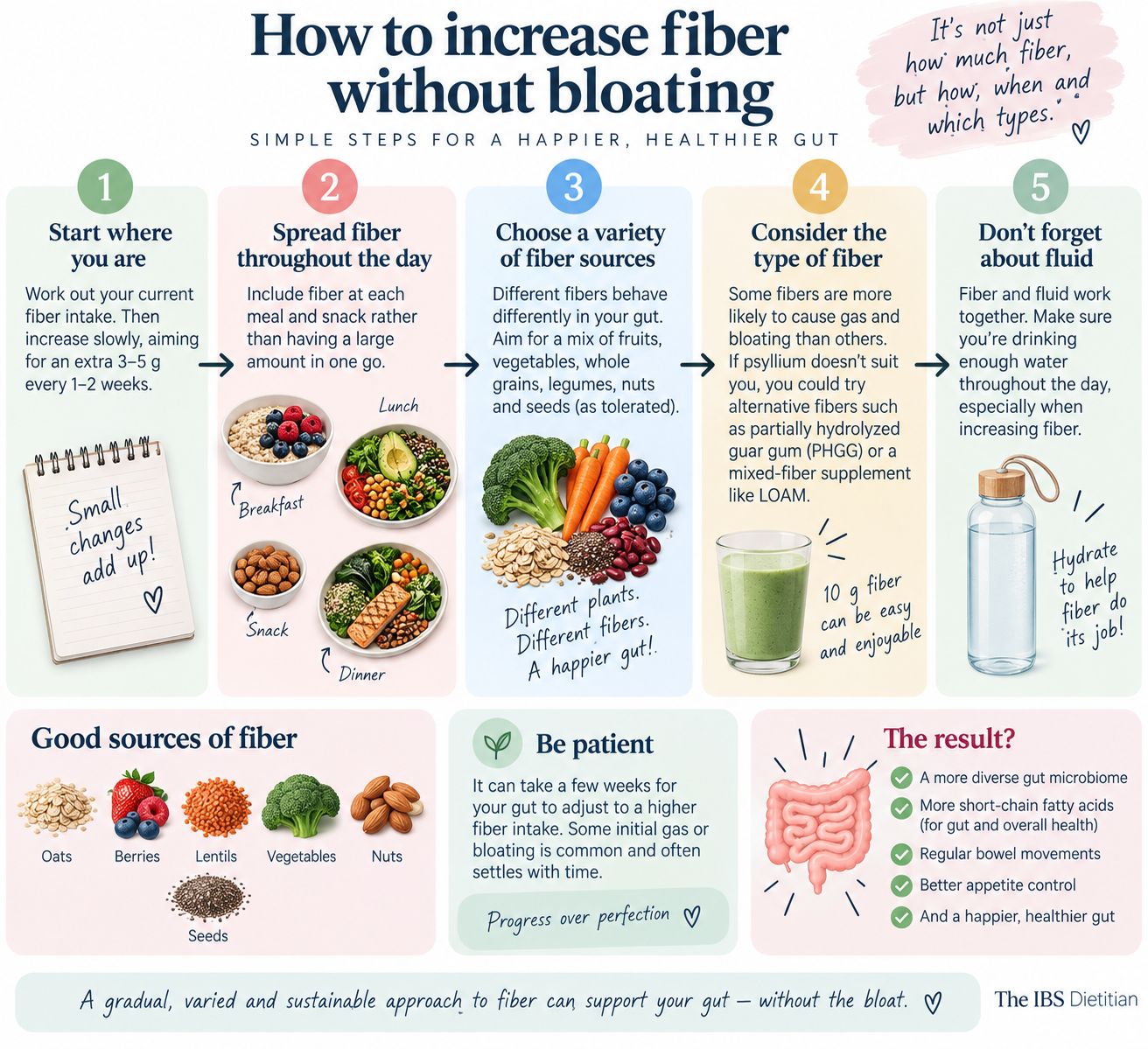
2. Build your fiber intake slowly, rather than all at once
If you’re currently eating 12g of fiber a day, please don’t read this article and suddenly start eating 30g tomorrow.
It’s one of the most common mistakes I see.
Your digestive system may need time to adjust to an increase in fiber. I generally prefer clients to make one manageable change, keep it consistent for several days and assess their tolerance before adding more.
Once you’re working towards 30g, I find it helpful to think about spreading fiber relatively evenly across the day rather than trying to get most of it from one enormous meal.
For example, you could aim for roughly 8–10g at breakfast, lunch and dinner, with a little more coming from snacks.
This isn’t a strict physiological requirement, and there’s nothing wrong with one meal containing more fiber than another. It’s simply a practical way of avoiding a sudden large fiber load.
Remember, 30g is a general population recommendation, not a target that everyone with IBS should force themselves to achieve regardless of their symptoms.
3. Stop relying entirely on vegetables for your fiber
I find that many people who are trying to eat healthily focus heavily on increasing their vegetable intake while forgetting about other important sources of fiber.
Vegetables are fantastic, but they also contain a lot of water. This means you would need to eat a considerable volume of vegetables to get all your daily fiber from them.
It’s much easier to reach your fiber target when you include a mixture of wholegrains, fruit, nuts, seeds, vegetables and pulses.
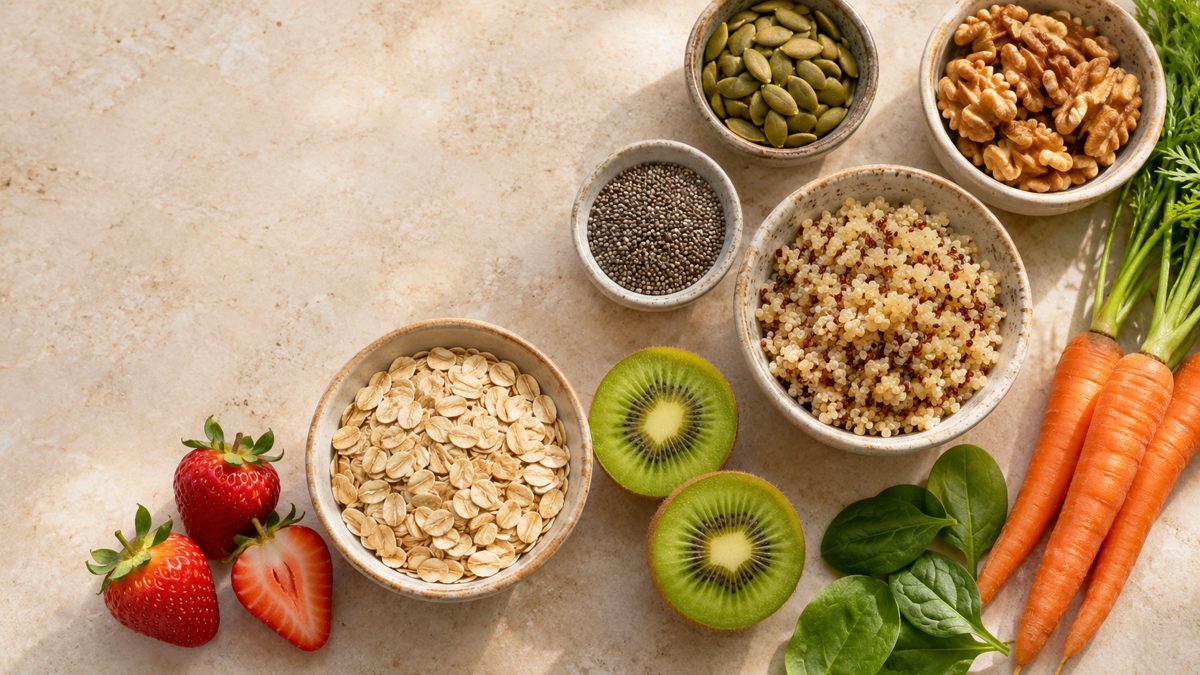
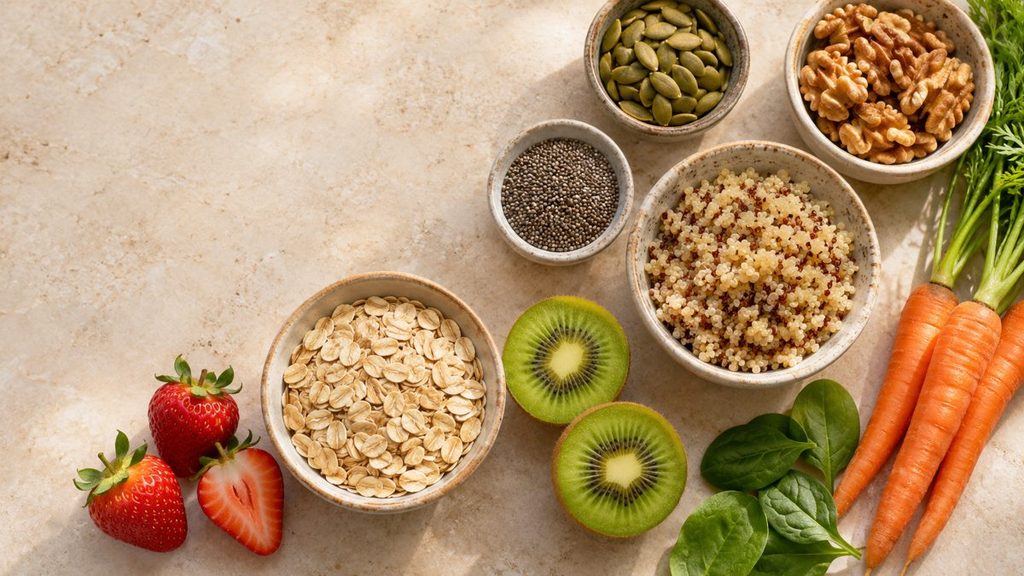
For my clients, I often suggest aiming to include at least two different wholegrain sources across their regular meals. Oats and quinoa are particularly useful starting points because they’re naturally gluten-free and can fit into a low-FODMAP diet in appropriate portions.
Other useful high-fiber foods for IBS include kiwi fruits, oranges, strawberries, blueberries, walnuts, chia seeds and ground linseed. For vegetables, carrots, green beans, aubergine and suitable portions of courgette can all be good options.
Of course, these aren’t the only foods you can eat with IBS. If you’re not sensitive to a particular FODMAP group, there’s no reason to restrict foods containing it unnecessarily.
My main message is to think about variety rather than restriction. Different fiber sources contribute different properties to your diet, and focusing on only a handful of supposedly safe foods may make it harder to meet your nutritional needs.
4. Use the one-third plate method for lunch and dinner
One of the easiest ways I help clients build more balanced meals is to get them to think about the proportions of food on their plate.
As a practical starting point, I suggest making approximately one-third of the plate vegetables, one-third wholegrains or another suitable starchy carbohydrate, and the remaining third a protein source.
For example, you could have salmon with quinoa and roasted carrots, or chicken with brown rice and green beans. It doesn’t need to be complicated, and the proportions can be adjusted to your energy requirements and tolerance.
What I particularly want you to stop doing is skipping the carbohydrates because you think they’re somehow unhealthy.
I regularly see people eating a huge salad with a little chicken for lunch and wondering why they’re struggling to get enough fiber, or why they’re starving again two hours later.
Wholegrains aren’t just there to provide energy. They can make a meaningful contribution to your daily fiber intake.
And don’t worry if you’re currently eating white rice or white bread. You don’t need to replace everything overnight. Start by swapping one carbohydrate source for a wholegrain version, see how you get on and gradually introduce more variety.
5. Upgrade your breakfast rather than sticking to ‘safe’ cornflakes
This is a particular bugbear of mine.
I see so many people with IBS who have been eating cornflakes for years because somebody told them they’re gentle on the gut.
Now, there absolutely are clinical situations where a low-fiber cereal is appropriate. For example, I sometimes use these foods with people who have undergone bowel surgery and temporarily need a prescribed low-fiber diet.
But for the average person managing IBS, there is usually no reason to rely on cornflakes indefinitely.
Cornflakes provide energy and are often fortified with vitamins and minerals, but they’re relatively low in fiber. A typical 30g portion of Kellogg’s Corn Flakes provides approximately 0.9g of fiber, compared with approximately 3g in 30g of oats.
Even swapping to a wholegrain gluten-free cereal such as Nutri-Brex, which provides approximately 2.4g per 30g, can make a difference.
And that’s before you’ve added anything else.
I particularly like oats because they’re inexpensive, versatile and easy to prepare in advance. You can have porridge, overnight oats or even blend them into a smoothie.
If you add a tablespoon of ground linseed to your porridge, that’s another approximately 2–3g of fiber without needing to make an entirely different breakfast.
The goal isn’t to make breakfast complicated. It’s to stop missing an easy opportunity to increase your fiber intake.
6. Use little fiber boosters throughout the day
One thing I’ve learnt from working with clients is that small, consistent changes are often far more sustainable than giving someone an entirely new meal plan.
You don’t necessarily need to cook different foods. Sometimes you just need to slightly change what you’re already eating.
For example, adding a tablespoon of ground linseed to your breakfast provides approximately 2–3g of additional fiber. Two medium kiwi fruits provide around 4g, while a handful of walnuts contributes approximately 2g.
I also encourage clients to think about their afternoon snacks. If you’re having something that contains very little fiber, adding a piece of fruit could easily provide another couple of grams.
These numbers might not sound particularly impressive individually, but they add up.
I would much rather see someone consistently add a few grams to foods they already enjoy than attempt an elaborate high-fiber meal plan that lasts three days before being abandoned.
7. Don’t be afraid to experiment with beans and pulses
Beans and pulses are some of the most unnecessarily feared foods I encounter in IBS practice.
Yes, they contain galacto-oligosaccharides, also known as GOS, which are a type of FODMAP. But only some people with IBS are sensitive to GOS, and even those who are may be able to tolerate smaller portions.
This is why I don’t automatically tell people with IBS to avoid lentils, chickpeas or beans.
I particularly like using canned lentils and chickpeas because some of their water-soluble FODMAPs leach into the liquid during processing. Draining and rinsing them can make them more suitable in smaller portions.
An easy way to introduce them is to add a small amount of canned lentils to your usual bolognese sauce, beef stew or homemade soup. You could also add some chickpeas to a casserole or salad.
You don’t have to suddenly eat an enormous bowl of beans.
Start with an appropriate portion, use the current low-FODMAP serving guidance if relevant, and gradually build up according to your tolerance.
And if you’ve successfully reintroduced GOS during the low-FODMAP process, remember that you don’t need to keep restricting it simply because the internet says beans are bad for IBS.
8. Rethink what makes a good high-fiber snack
I sometimes see clients choosing a few vegetable sticks as a snack because they’re trying to be healthy, but it’s worth remembering that not all apparently healthy snacks provide very much fiber.
For example, a small handful of vegetable sticks might provide relatively little fiber depending on the vegetables and quantities involved.
Two kiwi fruits, on the other hand, provide approximately 4g. A handful of walnuts provides around 2g, and combining nuts with fruit gives you even more.
I’m not suggesting everyone needs to snack between meals. If you’re comfortable eating three balanced meals and meeting your nutritional requirements, that’s absolutely fine.
But if you do enjoy an afternoon snack, think about whether you could include a useful fiber source rather than automatically reaching for something with very little.
This can be particularly helpful when your main meals haven’t provided as much fiber as you’d planned.
9. Have a Sunday evening ‘Life CEO’ meeting with yourself
This might sound slightly ridiculous, but it’s one of my favourite practical strategies.
Every Sunday evening, I want you to spend five minutes being the CEO of your own life.
Open your calendar and actually look at the week ahead.
I know from juggling work and two children myself that there are days when you have every intention of eating a balanced lunch, but then a meeting runs over, you’ve got another deadline and suddenly it’s time to collect the children from school.
Before you know it, lunch has become whatever you could grab in five minutes.
This is where I find planning ahead so helpful. If I know I’ve got a particularly busy day, I can make sure there’s something easy available rather than relying on having time to cook.
For example, bulk cooking a soup or casserole at the weekend means you’ve already got lunch sorted. You can add lentils or chickpeas to these meals for a simple fiber boost.
Alternatively, preparing a smoothie with oats, fruit and seeds can be a convenient option when you’re short on time.
And if you’re travelling, working away from home or know your usual meals aren’t going to be practical, a fiber supplement may be another convenient way of topping up your intake.
The aim isn’t to eat perfectly every day. It’s to recognise that good nutrition needs to fit around your actual life, not the imaginary version where you have unlimited time to cook.
10. Consider a fiber supplement for the days you’re falling short
As a dietitian, I’m always going to encourage you to get your fiber from food first.
Wholegrains, fruit, vegetables, nuts, seeds and pulses provide vitamins, minerals and other beneficial dietary components alongside fiber, which you simply don’t get from a fiber supplement alone.
However, I’m also a working mum of two, and I know that life doesn’t always allow for three beautifully balanced meals every day.
This is where I think fiber supplements can have a practical role.
Psyllium husk
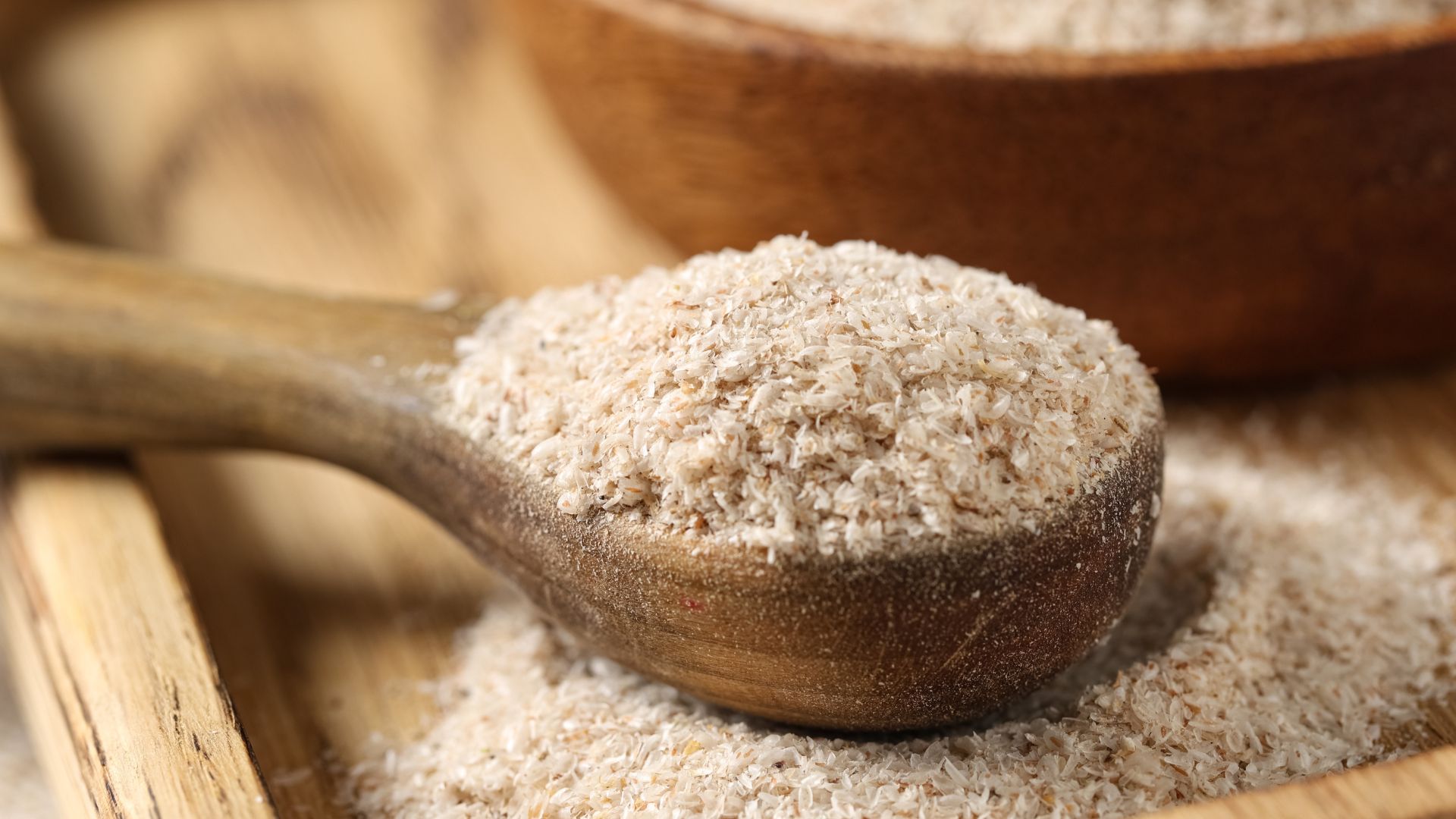
Psyllium is one of my favourite fiber supplements from a clinical perspective because it has good evidence supporting its use in IBS.
It absorbs water to form a gel, which changes how it behaves in the digestive system compared with more rapidly fermented fibers.
However, I also know that not everyone enjoys the texture. Some people find the thick, gel-like consistency difficult to tolerate from a taste and texture perspective.
LOAM prebiotic fiber
If you’re simply looking for a convenient way to increase your overall fiber intake, rather than specifically choosing a fiber for symptom management, another option is LOAM.
LOAM is a prebiotic fiber supplement developed by Dr Karan Rajan. It contains a blend of six fiber sources, including partially hydrolysed guar gum (PHGG), tapioca fiber, soluble wheat fiber, soluble corn fiber, xylo-oligosaccharides and soluble carrot fiber.
A full serving provides 10g of dietary fiber, which is one-third of the general UK adult daily recommendation.
One of the practical advantages is that it’s designed to mix into water without the thick gel-like texture you get with psyllium.
For me, this is about convenience rather than replacing food. If I know I’m going to have a particularly busy day when my usual meal routine is disrupted, having an easy way to top up my fiber intake can be useful.
It’s important to remember that LOAM hasn’t been established as a treatment for IBS, and the research on individual fiber ingredients can’t automatically be applied to the finished product. It also hasn’t been certified as low FODMAP by Monash University, so I would introduce it gradually rather than starting straight away with a full serving.
Get 20% off LOAM
If you’re interested in using LOAM as a convenient addition to your usual diet, you can get 20% off using my discount code THEIBSDIETITIAN. Shop LOAM here.
You can also read my full review for a more detailed breakdown of the ingredients, the available research and the limitations of the current evidence.
This is an affiliate partnership with LOAM. Individual tolerance varies, and fiber supplements should not be considered a replacement for medical management of IBS.
Frequently asked questions
How can I get 30g of fiber a day with IBS?
The easiest approach is to spread fiber-containing foods across your day rather than trying to get everything from one meal. Include wholegrains at breakfast and lunch, a mixture of vegetables and wholegrains with your main meals, and use fruit, nuts or seeds as small additional fiber sources.
If you’re currently eating very little fiber, increase your intake gradually instead of jumping straight to 30g.
What are the best high-fiber foods for IBS?
Some useful options include oats, quinoa, kiwi fruit, oranges, blueberries, walnuts, chia seeds, ground linseed and appropriate portions of pulses.
However, the best choices depend on your individual symptoms and tolerance. Not everyone with IBS needs to follow a low-FODMAP diet, and there is no single list of foods that suits everyone.
Can you eat wholegrains with IBS?
Absolutely. Having IBS doesn’t automatically mean you need to avoid wholegrains. Oats and quinoa can be good starting points, while other grains may be suitable depending on your FODMAP tolerance.
The key is to introduce changes gradually and pay attention to how your own digestive system responds.
Should you take a fiber supplement if you have IBS?
Not necessarily. Some people can comfortably meet their fiber requirements through food alone, while others may find a supplement useful.
The type of fiber matters, particularly if you’re choosing a supplement for a specific digestive symptom. Psyllium has good research supporting its use in IBS, while other products may be better considered as general dietary fiber top-ups rather than IBS treatments.
The bottom line
If there’s one thing I want you to take away from this article, it’s that having IBS doesn’t mean you need to spend the rest of your life avoiding fiber.
In fact, I find that many people with IBS have restricted their diets far more than they actually need to.
The answer is rarely to remove every food that might potentially trigger symptoms. It’s to work out what you personally tolerate, understand the different properties of fiber and gradually build a more varied diet.
Start with simple changes. Swap your usual cereal, add some ground linseed to breakfast, include wholegrains with your main meals and experiment with small portions of pulses.
And remember, you don’t have to get it right every single day.
A sustainable approach to fiber is far more valuable than a perfect diet you can’t realistically maintain.
If you’re looking for a convenient way to top up your fiber intake, you can also explore LOAM and get 20% off with my code THEIBSDIETITIAN. Shop LOAM with my 20% discount