What Can You Eat With IBS? A Dietitian’s Guide to Safe Foods
- Uncategorised

If you have IBS, you might feel as though your list of foods you can eat is getting smaller and smaller.
Perhaps you’ve stopped eating gluten, cut out dairy, avoided fruit and started checking every ingredient label. Yet you’re still bloated, constipated or rushing to the toilet.
I see this regularly with my IBS clients. And while food can certainly trigger IBS symptoms, the answer isn’t always to remove more of it.
So, what can you actually eat with IBS? Let’s look at the evidence, the foods that are generally well tolerated and why even so-called ‘safe’ foods can sometimes cause symptoms.
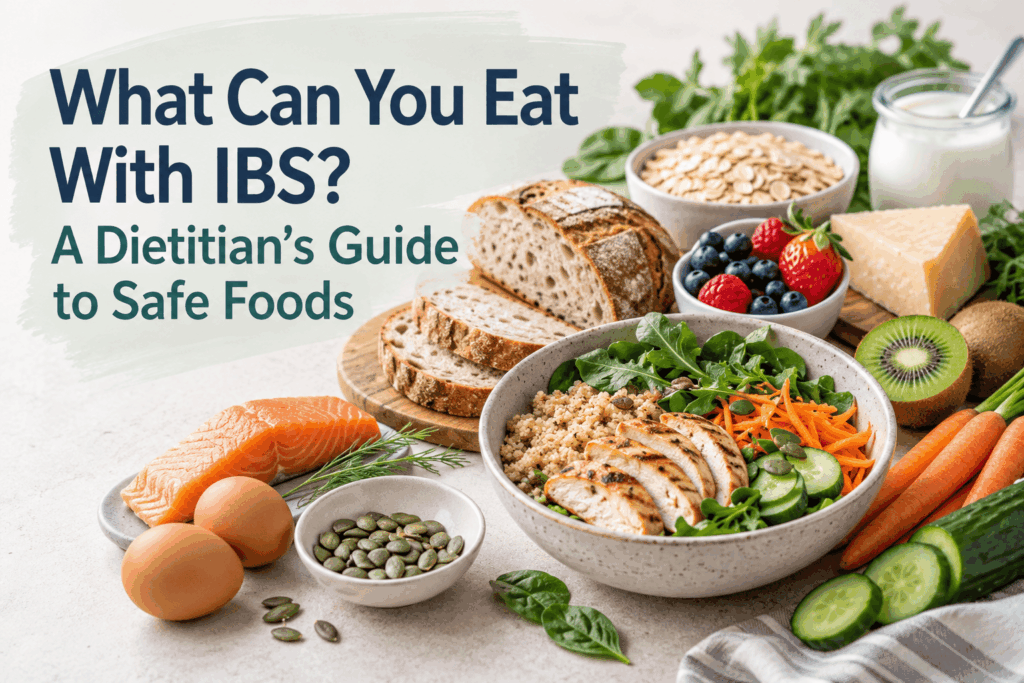
Are there any foods that are completely safe for IBS?
Unfortunately, there isn’t a single list of foods that everyone with IBS can eat without experiencing symptoms.
That’s because IBS is a disorder of gut-brain interaction. Symptoms can be influenced by how sensitive your gut is, how quickly food moves through your digestive system, constipation, stress, sleep and the amount of food you eat, as well as the food itself.
For example, someone might eat chicken and rice and feel bloated afterwards. This doesn’t automatically mean they’re intolerant to chicken or rice. They might already have a build-up of gas, be constipated or experience a strong gastrocolic reflex after eating.
And symptoms don’t always happen immediately. Depending on your bowel transit time and the mechanism involved, some dietary triggers can cause symptoms several hours later.
The important thing to understand is that experiencing symptoms after eating doesn’t necessarily mean the food you’ve just eaten caused them.
Is gluten bad for IBS?
Gluten is one of the first things people remove when they develop IBS symptoms. But I regularly see people avoiding gluten when it isn’t actually the problem.
Gluten is a protein found in wheat, barley and rye. Some people feel better when they stop eating gluten-containing foods, but this doesn’t automatically mean they’re reacting to gluten itself.
Wheat also contains fructans, which are fermentable carbohydrates known as FODMAPs. Fructans can contribute to bloating, gas and changes in bowel habits in some people with IBS.
This means that if you feel better when you stop eating bread or pasta, it may be the reduction in fructans rather than gluten that’s making the difference.
It’s also worth knowing that not all wheat-containing foods contain the same amounts of fructans. For example, traditionally fermented sourdough bread may contain lower amounts of fructans than some other breads, although this depends on how it’s made.
You don’t automatically need a gluten-free diet just because you have IBS.
What about wheat allergy and coeliac disease?
It’s important to understand that IBS, wheat allergy and coeliac disease are three different conditions.
A wheat allergy involves an immune reaction to proteins found in wheat. Symptoms can include an itchy rash or hives, swelling of the lips or face, vomiting, wheezing or difficulty breathing. These reactions often happen within minutes to a couple of hours of eating wheat.
Difficulty breathing, throat swelling or feeling faint after eating can indicate anaphylaxis, which requires emergency medical treatment.
Coeliac disease is different again. It’s an autoimmune condition where gluten triggers an immune response that damages the lining of the small intestine. Symptoms can include diarrhoea, constipation, bloating, abdominal pain, fatigue and iron deficiency. Some of these overlap with IBS, which is why testing is so important.
In fact, NICE recommends testing for coeliac disease as part of the standard investigations for IBS.
Don’t remove gluten before being tested for coeliac disease because this can make the test results unreliable.
Having IBS doesn’t mean you have a wheat allergy or coeliac disease, but it’s possible to have more than one condition.
Can you eat dairy with IBS?
Yes, and this is another area where I see people unnecessarily cutting out entire food groups.
First, we need to separate two completely different things: a cow’s milk protein allergy and lactose intolerance.
Cow’s milk allergy involves an immune response to milk proteins such as casein or whey. Immediate allergic reactions can cause hives, swelling, vomiting, wheezing or breathing difficulties. Some milk allergies cause delayed symptoms, particularly in children.
Lactose intolerance isn’t an allergy. It happens when you don’t produce enough of the enzyme lactase to digest lactose, a carbohydrate found in milk.
Undigested lactose can lead to bloating, excessive gas, abdominal discomfort and diarrhoea.
Now here’s where things get confusing. Having IBS doesn’t automatically mean you’re lactose intolerant, but some people with IBS also have lactose intolerance. These are two separate conditions that can exist together.
And even if you are lactose intolerant, you don’t need to avoid all dairy products.
Many cheeses are naturally very low in lactose because of how they’re produced. This includes cheddar, parmesan and feta – these are ‘safe’ cheeses for people with IBS.
It always makes me laugh a little when I see lactose-free feta being sold in supermarkets because regular feta is already so low in lactose that most people with lactose intolerance can tolerate a normal serving!
Products such as milk and yoghurt contain more lactose, but lactose-free versions are widely available.
The important thing is to identify whether lactose is actually an issue for you, rather than assuming all dairy is bad for IBS.
And remember that lactose-free cow’s milk still contains milk proteins, so it isn’t suitable for someone with a cow’s milk protein allergy.
Which vegetables are safe to eat with IBS?
Vegetables are one of the first food groups I see people restricting when they’re struggling with bloating.
But avoiding vegetables altogether can mean missing out on important fibre, vitamins and minerals. It can also make constipation worse.
Not everybody with IBS reacts to FODMAPs, but if you’re looking for vegetables that are generally low in fermentable carbohydrates, these are some useful options:
- Carrots: Try them roasted, boiled or grated into a salad.
- Cucumber: An easy addition to sandwiches, salads or snacks.
- Spinach: Add a handful to an omelette or cooked meal.
- Green beans: A simple side dish with chicken, fish or tofu.
- Potatoes: Baked, mashed or boiled, with the skin included if tolerated for additional fibre.
Some vegetables have low-FODMAP serving sizes but become higher in FODMAPs when you eat larger quantities. So portions can matter, particularly if you’re following a structured low-FODMAP diet.
For a more comprehensive list, including which vegetables contain fructans or mannitol and recipe ideas, read my complete guide to low-FODMAP vegetables.
Remember, the aim isn’t to eat only low-FODMAP vegetables forever. It’s to identify which foods and amounts you personally tolerate while keeping as much variety in your diet as possible.
What fruit can you eat with IBS?
Fruit often gets blamed for IBS symptoms because certain fruits contain fructose or polyols, which can contribute to bloating, gas and diarrhoea in some people.
However, there are plenty of fruits that are low FODMAP in suitable portions.
Some of my favourite options include:
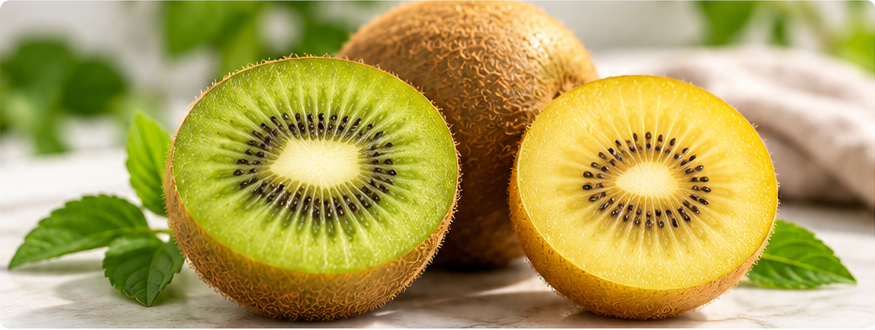
- Kiwi: Particularly interesting for people with constipation because research suggests green kiwifruit can improve bowel movements.
- Oranges: A convenient option for snacks or breakfast.
- Blueberries: Easy to add to porridge or yoghurt, remembering that portion sizes matter.
- Pineapple: A useful option for fruit salads or as a snack in suitable portions.
- Unripe bananas: These have a different FODMAP profile from ripe bananas.
I would also consider how much fruit you’re eating at once. For example, having several different fruits together in a large smoothie may increase your total FODMAP intake, even when the individual ingredients have low-FODMAP serving sizes.
For a much more detailed breakdown, including serving sizes, high-FODMAP fruits and recipes, see my complete low-FODMAP fruit guide.
And remember, if you can tolerate a fruit that’s considered high FODMAP, there’s no reason to stop eating it simply because you have IBS.
Are oats safe for IBS?
Oats can be a really useful addition to an IBS-friendly diet, particularly for people who struggle to get enough fibre.
They contain soluble fibre, including beta-glucan, which can help support bowel function.
However, eating a large portion of oats when you’re not used to much fibre may contribute to bloating or discomfort. That’s why I generally recommend building up fibre intake gradually rather than suddenly adding large amounts.
Oats can be particularly helpful at breakfast, whether you prefer porridge, overnight oats or adding them to yoghurt.
If you have coeliac disease, choose oats that are specifically labelled gluten-free, and remember that a small proportion of people with coeliac disease may react to avenin, the protein naturally found in oats.
Is chicken and rice good for IBS?
Chicken and rice are often recommended as ‘safe’ foods for IBS, and they’re generally low in FODMAPs when prepared without high-FODMAP ingredients.
But I wouldn’t recommend relying on them as the foundation of your diet.
Neither chicken nor white rice provides much fibre. If you’re already constipated, repeatedly eating meals that contain very little fibre may make it harder to manage your bowel movements.
And just because a meal is low FODMAP doesn’t mean it can’t trigger symptoms. Large meals, high-fat sauces, stress and an already sensitive gut can all influence how you feel afterwards.
I’d much rather see you enjoying a balanced meal with protein, carbohydrates, vegetables and some healthy fats than restricting yourself to plain chicken and rice out of fear.
Can protein powder make IBS worse?
Protein powders aren’t automatically bad for IBS, but the ingredients can make a difference.
Some powders contain lactose, particularly certain whey protein concentrates. Others contain ingredients such as inulin, chicory root fibre, fructooligosaccharides or sugar alcohols, which can contribute to symptoms in some people.
Whey protein isolate generally contains less lactose than whey concentrate, although amounts vary by product.
Plant-based protein powders can also be suitable, but it’s worth checking the full ingredient list rather than assuming they’re better for IBS simply because they’re dairy-free.
And don’t forget that a protein shake can cause symptoms for reasons unrelated to the powder itself, such as the amount consumed, what you’ve mixed it with or how quickly you’ve drunk it.
Why do I get IBS symptoms even when I eat safe foods?
This is one of the most frustrating things about IBS, and something I spend a lot of time explaining to clients.
You might eat a meal that is considered low FODMAP, only to feel bloated, uncomfortable or urgently need the toilet afterwards.
But that doesn’t necessarily mean you’ve found another food intolerance.
1. Your gut may already be sensitive
People with IBS can experience visceral hypersensitivity, which means the nerves in the gut respond more strongly to normal stretching and movement.
So even a normal amount of gas or food moving through the digestive system may feel uncomfortable.
2. Constipation may be contributing
If stool is moving slowly through your bowel, you may experience bloating, abdominal discomfort and a feeling of fullness even after eating foods you normally tolerate.
And remember, you can open your bowels every day and still be constipated if you’re not emptying properly.
3. Your symptoms may be caused by something you ate earlier
We naturally tend to blame the last thing we ate, particularly when symptoms begin shortly afterwards.
But fermentable carbohydrates may take hours to reach the large bowel, where bacteria ferment them.
Depending on your bowel transit time, symptoms related to FODMAP fermentation may appear around 4 to 48 hours after eating.
That makes identifying dietary triggers much more complicated than simply looking at your last meal.
4. Meal size and fat content can influence symptoms
Large meals can stimulate the gastrocolic reflex, which is the normal response that increases movement in your large bowel after eating.
For someone with IBS, this response can feel exaggerated and may contribute to abdominal cramping or an urgent need to open their bowels.
Fat can also stimulate this response, which is why some people notice symptoms after particularly rich meals.
5. Stress, poor sleep and food-related anxiety can play a part
The gut and brain communicate constantly, so factors such as stress, anxiety and sleep can influence gut sensitivity and bowel function.
And when you’ve spent months or years worrying about what food might do to your symptoms, eating itself can become stressful.
This doesn’t mean your symptoms are imaginary. They’re real physical symptoms, but the gut-brain connection can influence how strongly you experience them.
It’s also possible to develop a heightened awareness of normal gut sensations when you’re constantly monitoring your stomach after eating.
Should you follow a low-FODMAP diet for IBS?
The low-FODMAP diet has good evidence for improving IBS symptoms in some people, but it isn’t the right starting point for everybody.
It’s a structured, short-term process involving restriction, reintroduction and personalisation. It isn’t intended to be a permanent diet where you avoid every high-FODMAP food.
In clinical practice, I often find that people have already restricted far too many foods before they come to me.
Sometimes we need to work on bowel habits, meal patterns, fibre intake or gut-brain factors before considering whether a low-FODMAP diet is appropriate.
And even when we do use a low-FODMAP approach, the goal is always to get as much variety back into the diet as possible.
How I help my IBS clients eat more confidently
One of the biggest mistakes I see is people trying to identify every possible food trigger while their IBS symptoms are still completely uncontrolled.
If you’re bloated, uncomfortable or experiencing unpredictable bowel movements most days, it’s incredibly difficult to work out whether a particular food is actually causing your symptoms.
That’s why I prefer to focus on getting symptoms better controlled first.
Depending on the person, that might involve addressing constipation, adjusting fibre intake, improving meal patterns, considering appropriate medication or looking at factors affecting the gut-brain connection.
Once symptoms are more stable, it becomes much easier to assess food tolerance and gradually bring foods back into the diet.
And this is where confidence matters. If you’ve spent years believing that dozens of foods are dangerous for your gut, rebuilding trust in eating can take time.
My aim isn’t to help you create the perfect list of safe foods. It’s to help you eat as widely and confidently as possible while managing your symptoms.
Frequently asked questions about safe foods for IBS
What are the safest foods to eat during an IBS flare-up?
There isn’t one set of foods that will settle every IBS flare-up. What helps depends on whether you’re experiencing diarrhoea, constipation, bloating or pain. Regular meals, adequate fluids and foods you already tolerate can be useful, but I’d avoid automatically removing large amounts of fibre or restricting your diet further.
Can you eat bread with IBS?
Yes. Many people with IBS can tolerate bread. If wheat fructans are a trigger for you, the type and amount of bread may matter. Some traditionally fermented sourdough breads may be lower in fructans. Gluten-free bread isn’t automatically necessary unless you have coeliac disease or another specific reason to avoid gluten.
Is rice safe for IBS?
Rice is generally low FODMAP and can be included in an IBS-friendly diet. However, white rice is relatively low in fibre, so relying heavily on it may not be ideal if you struggle with constipation.
Can you eat eggs with IBS?
Eggs don’t contain FODMAPs and can be a useful source of protein. However, the way they’re cooked, what you eat alongside them and your individual gut sensitivity may influence symptoms.
Can you eat bananas with IBS?
Yes. Bananas can be included in an IBS-friendly diet, although their FODMAP content varies with ripeness and portion size. There’s no need to avoid them unless you’ve identified a genuine problem with your usual serving.
Why does everything I eat seem to trigger my IBS?
If you experience symptoms after almost every meal, it doesn’t necessarily mean you’re intolerant to dozens of foods. Gut sensitivity, constipation, the gastrocolic reflex, meal size and gut-brain factors may all be contributing. This is a situation where a structured assessment is often more useful than continuing to remove foods.
Can IBS and lactose intolerance happen together?
Yes. IBS and lactose intolerance are separate conditions, but some people have both. Lactose intolerance is caused by difficulty digesting lactose, whereas IBS involves altered gut-brain interaction and bowel function. Having both doesn’t mean you need to avoid every dairy product, as many cheeses are naturally very low in lactose and lactose-free alternatives are available.
The bottom line: What can you eat with IBS?
If there’s one thing I want you to take away from this article, it’s that IBS doesn’t mean you need to live on a handful of ‘safe’ foods.
There are lots of foods you can enjoy, and even foods that are considered high FODMAP may be perfectly well tolerated by you.
Instead of continually cutting out more foods, we need to understand what’s actually driving your symptoms, get those symptoms under better control and work towards a diet that’s varied, nutritious and enjoyable.
Because managing IBS should give you more freedom around food, not less.
Book a free enquiry call
You might also like...
Kiwi for Constipation: Do You Need to Eat the Skin?
The connection between IBS and neurodivergence