Kiwi for Constipation: Do You Need to Eat the Skin?
- Uncategorised

Quick answer: You do not need to eat kiwi skin to help constipation. Clinical studies have found that eating two peeled green kiwis each day can improve bowel movement frequency and abdominal comfort, including in people with constipation-predominant IBS (IBS-C). The skin is edible and adds fiber, but it is optional.
Does kiwi help with constipation?
Yes. Research suggests that green kiwi can be a useful dietary option for constipation. In a 2023 international randomised crossover trial, 60 adults with functional constipation and 61 with IBS-C were assigned to eat two peeled green kiwis daily or take 7.5 g of psyllium daily for four weeks, with a washout period between treatments. [1]
Compared with baseline, the kiwi period increased complete spontaneous bowel movements by an average of 1.53 per week in the functional constipation group and 1.73 per week in the IBS-C group. Participants also reported improvements in gastrointestinal comfort. A complete spontaneous bowel movement means passing stool without using a rescue laxative and feeling that the bowel has emptied fully. These are group averages, so individual responses vary. [1]
How many kiwis should you eat for constipation?
Two green kiwis a day is the amount tested in the best-known clinical trial. Researchers assessed outcomes after four weeks of daily consumption. You do not have to eat both at once, and you can eat them as part of a meal or snack. [1]
Some people may notice changes earlier, but the research does not establish a reliable number of hours or days before kiwi works for everyone. If you want to assess whether it helps you, try a consistent routine and monitor your bowel movements, stool consistency and symptoms over several weeks. [1]
Why might kiwi help you poop?
Kiwi contains dietary fiber, which can contribute to stool bulk and water retention. The two peeled green kiwis used in the 2023 trial provided approximately 6 g of fiber, although the amount in everyday fruit varies with size and variety. [1] [3]
Researchers are also investigating other properties of kiwi, including its water-holding capacity and the protein-digesting enzyme actinidin. Actinidin is a plausible contributor to digestive effects, but it has not been established as the main reason kiwi improves constipation in humans. The clinical benefit is better supported than any single proposed mechanism. [1] [3]
Do you need to eat kiwi with the skin on?
No. The constipation trial used peeled green kiwi, so eating the fuzzy skin is not necessary to obtain the benefits observed in that research. [1]
Kiwi skin is edible and provides extra fiber. If you enjoy it, wash the fruit thoroughly before eating. If you dislike the texture, simply peel it. You can also blend a washed, whole kiwi into a smoothie if you prefer the skin that way. [1]
Can kiwi help if you have IBS-C?
Yes, kiwi is worth considering for people with IBS-C because participants with IBS-C were included in the 2023 trial and experienced improvements in bowel movement frequency and gastrointestinal comfort. [1]
Green kiwi can also fit into a low-FODMAP eating pattern at suitable portions. However, low FODMAP does not mean symptom-free for everyone. Individual tolerance matters, especially if you are experiencing bloating, abdominal pain or sensitivity to increased fiber. If you are following the elimination phase of the low-FODMAP diet, check the current tested serving size in the Monash University FODMAP app. [1]
For more information, read our guide to IBS-C and its treatment.
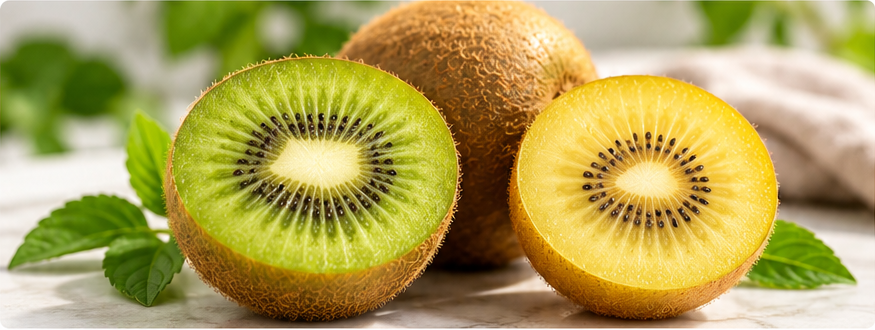
Green or gold kiwi: which is better for constipation?
Here is how the evidence compares:
| Option | What research tells us | Practical takeaway |
|---|---|---|
| Green kiwi | Studied in adults with functional constipation and IBS-C. | Two peeled green kiwis daily is the best-studied approach. |
| Gold kiwi | Some research suggests benefits, but studies differ in methods and preparations. | A reasonable preference, but not proven equivalent to green kiwi. |
| Kiwi skin | The key green-kiwi trial used peeled fruit. | Skin is optional; wash it if you choose to eat it. |
Green kiwi has the stronger direct clinical evidence, particularly for adults with functional constipation and IBS-C. Gold kiwi has also been studied, but the evidence is less extensive and studies may use different varieties, preparations and populations. We cannot assume that two gold kiwis have exactly the same effect as two green kiwis. [1] [4]
If constipation relief is your main goal and you want to follow the best-studied approach, choose two green kiwis daily. If you prefer gold kiwi, it can still be part of a varied diet. [1] [4]
Easy ways to eat kiwi every day
- Eat two peeled green kiwis as a snack.
- Slice kiwi over porridge or overnight oats.
- Add it to yoghurt with oats or seeds.
- Blend kiwi into a smoothie, with or without the skin.
- Serve it with other fruit as part of breakfast.
You do not need a special recipe or to eat kiwi on an empty stomach. The main consideration is finding a routine you can follow consistently.
Frequently asked questions
How long does kiwi take to work for constipation?
There is no guaranteed time. The major clinical trial assessed the effect of two green kiwis daily over four weeks. Some people may notice changes sooner, but responses vary. [1]
Is one kiwi a day enough for constipation?
One kiwi contributes fiber and nutrients, but the strongest direct evidence for constipation relief comes from studies using two green kiwis daily. We cannot assume that one kiwi produces the same effect. [1]
Can kiwi cause bloating?
Yes, some people may experience bloating or discomfort, even with a food that is suitable at low-FODMAP portions. This depends on individual tolerance, overall diet and bowel function. [1]
Is kiwi better than psyllium for constipation?
Both may help. A clinical trial compared two green kiwis daily with 7.5 g of psyllium daily and found benefits with kiwi. That does not establish kiwi as universally better than psyllium, and the best option depends on your symptoms, preferences and treatment needs. [1]
Can you eat kiwi skin safely?
For most people who tolerate kiwi, the washed skin is edible. Avoid kiwi entirely if you have a kiwi allergy. You do not need the skin for the constipation benefits observed in clinical trials. [1]
When should you seek medical advice?
Seek medical assessment if constipation is new, persistent or worsening, or if you notice rectal bleeding, unexplained weight loss, iron-deficiency anaemia, or a significant change in bowel habits.
Severe abdominal pain, vomiting and inability to pass stool or gas need urgent medical attention.
The bottom line
Eating two peeled green kiwis daily is an evidence-based dietary option that may improve constipation and abdominal comfort, including in IBS-C. You do not have to eat the skin.
Green kiwi has the strongest direct evidence, and consistency matters more than forcing yourself to eat a texture you dislike. Kiwi can be one part of a wider constipation management plan.
References
- Gearry RB and colleagues. Consumption of 2 Green Kiwifruits Daily Improves Constipation and Abdominal Comfort: Results of an International Multicenter Randomized Controlled Trial. American Journal of Gastroenterology. 2023.
- Clinical research on kiwifruit and bowel function (PubMed).
- Research reviewing the digestive properties of kiwifruit and actinidin.
- Research discussing gold kiwifruit and bowel function.
Written by: Barbara Lešnik, RD, MSc.
Clinically reviewed by: Kirsten Jackson, Consultant Dietitian, BSc Hons, RD, PG Cert.
Book a free enquiry call
You might also like...
Kiwi for Constipation: Do You Need to Eat the Skin?

The connection between IBS and neurodivergence